VR Sickness: The Problem Your Users May Never Report
A technically successful VR session can still leave users feeling unwell. Daniel Sánchez explores comfort, unreported cybersickness and telemetry for investigation.
Editorial review: Reviewed for technical accuracy and analytical soundness by the Gossip Analytics editorial team before publication. Published and updated dates above reflect substantive edits. Meet the authors.
Methodology: Written from applied XR product work and aggregated behavior patterns. Where a scenario is illustrative rather than measured, it is labelled in the text. No raw audio, personally identifying data or named customer deployments are used.
Related reading: XR analytics glossary · What is XR analytics · Case studies
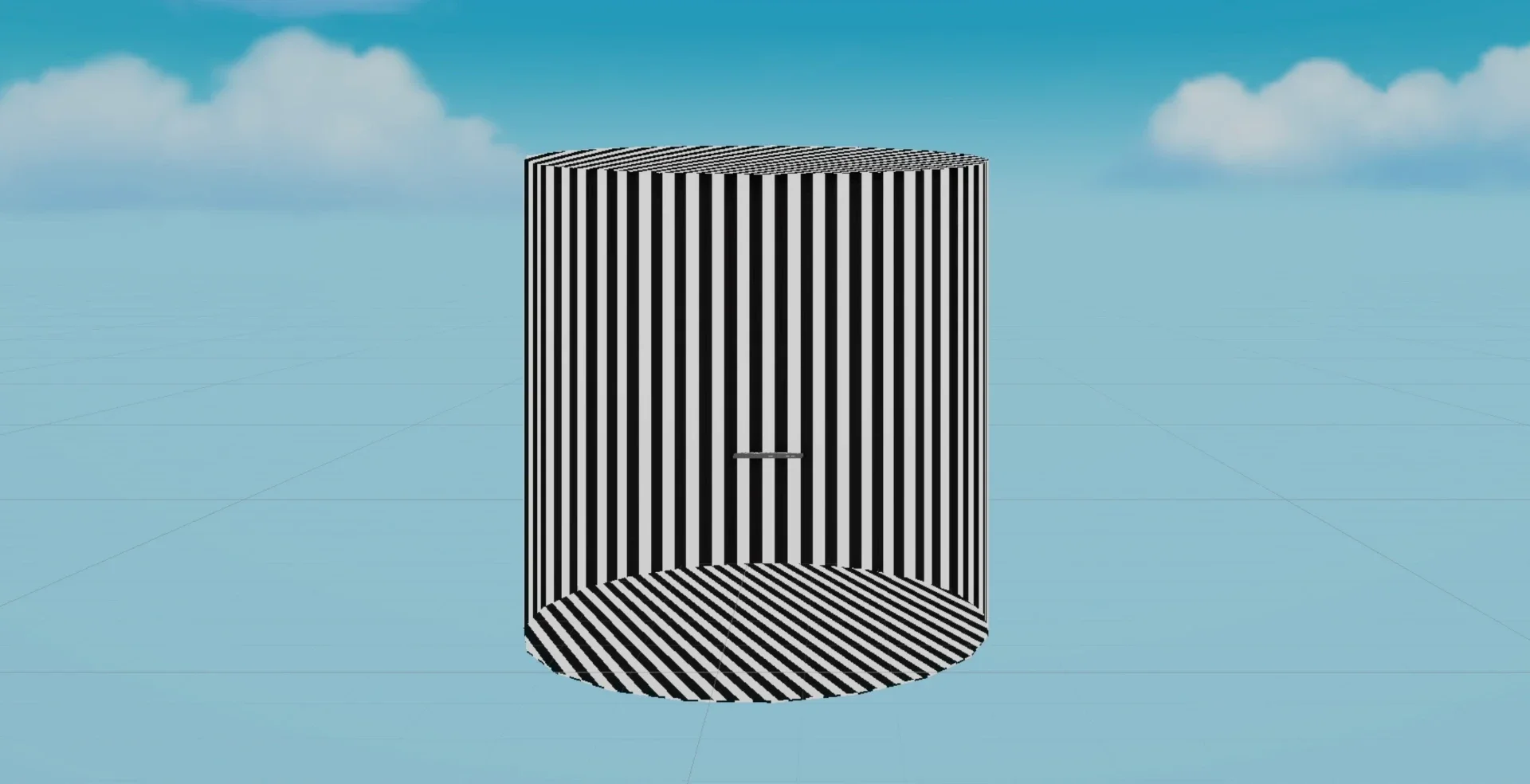
I once spent an entire day recovering from a VR experience. The people who built it probably never knew.
Virtual reality can create remarkable experiences. It can take us into places that don't exist, help us learn through simulation, and change how we interact with digital environments.
But there's a problem the XR industry has been dealing with for decades.
And despite improvements in hardware, tracking, rendering, and interaction design, it hasn't disappeared.
VR sickness.
Also known as cybersickness, it can cause nausea, dizziness, disorientation, headaches, and other symptoms during or after immersive experiences.
For some people, the discomfort is temporary. For others, the effects can persist long after removing the headset.
I know because I've experienced it myself.
When a VR experience affects your entire day
Over the years, I've tested many immersive experiences. Some were impressive. Others were technically interesting but physically uncomfortable.
And on several occasions, I experienced severe VR sickness.
Not just a little dizziness.
There were times when the symptoms were strong enough to leave me unable to function normally for an entire day.
Think about that for a moment.
You spend a few minutes inside a virtual environment, remove the headset, and the consequences stay with you for hours.
As someone who has spent years working in UX and immersive technologies, that experience changed how I think about VR quality.
Because an application can run without crashing, maintain acceptable performance, and complete every expected interaction.
And still deliver an experience that makes someone physically sick.
That's not simply a technical problem.
It's an experience problem.
And one that deserves far more attention.
A problem VR has carried for decades
VR sickness isn't new.
Researchers have studied simulator sickness and related symptoms for decades, long before today's standalone headsets became widely available.
One explanation involves sensory conflict: what the eyes perceive doesn't always match what the vestibular system, responsible for balance and spatial orientation, detects.
For example, a user might see themselves moving rapidly through a virtual environment while their physical body remains stationary.
Other contributing factors can include artificial locomotion, unexpected camera movement, latency, unstable frame rates, visual conditions, and individual sensitivity.
Modern VR hardware has improved many aspects of immersion, but better hardware alone cannot eliminate every source of discomfort.
The challenge is especially relevant in applications where users are expected to remain immersed for extended periods, such as training, education, simulation, and enterprise experiences.
In these environments, discomfort isn't just an inconvenience.
It can interfere with learning, interrupt tasks, reduce willingness to return, and undermine the experience the application was designed to deliver.
The most concerning part? Your users might never tell you.
Imagine someone testing your VR application.
They enter the experience, explore the environment, complete a few interactions, and eventually remove the headset.
Maybe they felt dizzy. Maybe they experienced nausea. Maybe they simply wanted to stop.
What happens next?
They might tell a colleague.
They might decide VR isn't for them.
They might never use your application again.
But will they report the problem to your development team?
Not necessarily.
And that's where the real challenge begins.
If nobody reports the discomfort, developers may have no reason to suspect that something is wrong.
Their dashboards might show a completed session.
Their application might have generated no crashes.
Their performance metrics might look acceptable.
Yet the user's actual experience was anything but successful.
This creates a dangerous blind spot: technical success can coexist with physical discomfort.
And without the right information, teams cannot easily investigate what happened.
Why we decided to investigate this at Gossip Analytics
When we started building Gossip Analytics, our objective wasn't simply to collect more data from XR applications.
We wanted to help teams understand what people actually experience inside immersive environments.
Where they move.
How they interact.
Where friction appears.
And which signals deserve further investigation.
VR sickness became an important part of that conversation.
Partly because of my own experiences, but also because we understood that comfort is fundamental to immersive UX.
So we started testing.
We worked with Unity-based experiences, conducted different tests, and involved real participants, including men, women, and children.
The objective was to explore how discomfort-related behavior and technical conditions could be observed and measured within immersive experiences.
We wanted to move beyond a simple question:
“Did the user feel sick?”
Toward something more useful for product and development teams:
“What was happening inside the experience when potential discomfort appeared?”
Because knowing that someone felt uncomfortable matters.
Understanding the context in which it happened is what helps teams investigate and improve the experience.
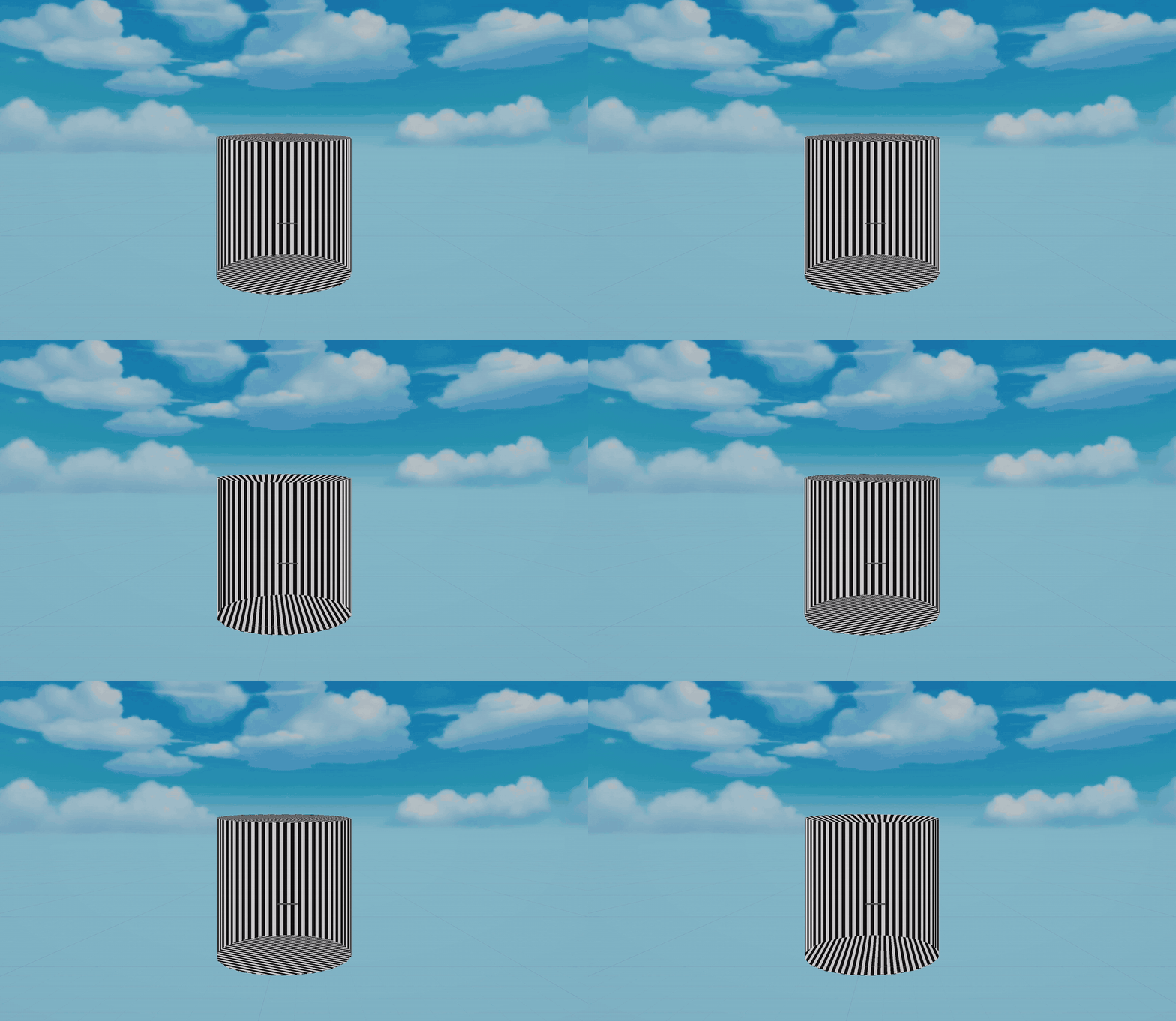
Unity test environment used to explore immersive comfort. The animation illustrates the scene, not a diagnosis of VR sickness.
From invisible discomfort to measurable signals
This is where immersive analytics can make a difference.
Instead of relying exclusively on users to report problems, teams can examine captured signals associated with the experience.
Gossip Analytics brings together spatial, behavioral, and technical telemetry to help teams investigate how their XR applications are being experienced.
Our Comfort analytics are part of that approach.
The objective is to give teams greater visibility into conditions and patterns that may be relevant to user comfort.
For example, developers may need to investigate:
- Whether discomfort-related signals appear during particular movements or interactions.
- Whether specific parts of an experience deserve closer inspection.
- Whether technical performance conditions coincide with problematic sessions.
- Whether experience changes should be evaluated through additional testing.
These signals provide context for investigation. They are not a medical diagnosis, nor do they independently prove that someone experienced cybersickness.
That distinction matters.
Telemetry can reveal conditions worth investigating. The user's reported experience remains essential to understanding actual symptoms.
Our goal is to make it easier for teams to recognize potential issues, examine the available evidence, and make better-informed design and engineering decisions.
Testing with real people changes your perspective
One of the most important lessons from our work is that immersive comfort cannot be evaluated only from the developer's perspective.
People respond differently to virtual environments.
Previous VR exposure, individual sensitivity, movement characteristics, and experience design can all influence how someone responds.
That's why we considered it important to conduct tests with different participants rather than rely exclusively on our own impressions.
Working with adults and children also reinforces the need for appropriate safeguards and age-specific considerations during immersive testing.
These tests informed our understanding of the problem and the development of our approach to comfort analytics.
They do not establish that any single metric can predict or diagnose VR sickness across all users.
But they reinforce something fundamental:
An immersive experience should be evaluated through what people actually experience, not only through what the application successfully executes.
A successful session doesn't always mean a good experience
Consider two hypothetical VR sessions.
In the first, a user completes a training simulation without technical errors, feels comfortable, and is willing to repeat it.
In the second, another user completes exactly the same simulation, but experiences dizziness and decides never to return.
From a purely technical perspective, both sessions might appear successful.
From a UX perspective, they are fundamentally different.
This distinction is particularly important for organizations investing in immersive training, simulation, and other enterprise applications.
Completing a task is not the same as delivering a usable, comfortable, and repeatable experience.
And if discomfort remains invisible, teams risk optimizing the wrong things.
Building VR experiences people can actually use
At Gossip Analytics, we believe immersive analytics should go beyond counting sessions, events, and technical errors.
It should help teams understand the quality of the experience itself.
Our work on comfort measurement comes from a very real concern: the possibility that someone can leave an immersive application feeling physically unwell, while the people responsible for that experience never know there was a problem.
I've been that person.
I've experienced the dizziness, the nausea, and the lost hours.
And I know how easily those experiences can remain outside traditional product analytics.
We cannot assume every symptom will be detected automatically, and no analytics platform can replace responsible testing with real users.
But we can give development teams better visibility into the signals captured during immersive sessions.
We can make potential problems easier to investigate.
And we can treat comfort as an essential dimension of XR experience quality, rather than an afterthought.
Because the real measure of a successful VR experience isn't just whether the application worked.
It's whether the person using it was able to experience it comfortably.
Gossip Analytics helps XR teams understand spatial behavior, technical performance, and immersive experience quality through telemetry and AI-supported insights.
Want to apply this to your XR product?
Talk to our team and see how Predictive XR Analytics built on biomechanical patterns applies to your immersive product.
Next Decision
Continue your decision path
Compare platforms